Sunday, April 28, 2013

The Rolling Stones Surprise after 50years of keeping us Rockin'

I just saw the Rolling Stones live and finding words to capture the emotions that were flying around the claustrophobic space of the echoplex last night is a task doomed to failure but well worth the attempt.
First off, I'm aware that this folk tale is one of those big fish stories that nobody actually wants to hear. "Don't tell me how lucky you feel for winning the lottery you jerk!" But if you saw Paul Bunyon sack the city of Troy while riding atop Ahab's whale than you would feel a similar compulsion to describe what you saw. 

GETTING A TICKET

One of the key contributing factors to the electricty in the air was the nature of how the tickets were given out. Announced over twitter and radio stations at the very last minute, the surprise show's limited 312 ticket give away caused an instantaneous buzz that turned into a strangely manic desperation and jealousy that I could only compare to footage of people waiting to hear if they made the cut at the city wide American Idol auditions. The tickets were given through a random lottery at the El Rey Theater on Wilshire blvd. in Los Angeles and the line went all the way around the block. 


After a couple thousand people they cut off the line and turned all new comers away. I walked around filming, listening, and speaking to people from all over who each had a uniquely interesting story about how they ended up there and how badly they wanted to see the Stones. Some got a text from someone at work, a couple heard an announcement and happened to be driving near by. A lady had flown in from Japan and group had driven in from Texas because it is apparently a Rolling Stones tradition to do a show in or around the city where they are rehearsing for their upcoming tour. Some had been camped out all night. Some saw a tweet and instantly rushed over. I happened to be walking my dog and saw the hysteria because I live next to the El Rey Theater. In the above photo, they are giving out the lottery tickets that were sitting in a bucket.
This is mine. Welcome to the 50th Hunger Games I kept joking.
Just getting one was an emotional ordeal. Because I took an instant to take my dog home, the line got cut off. They said to go home because they weren't going to give any more lottery tickets out. Myself and about 20 other people said fuck you, we're going to stay hear until they force us to leave. "Look at all of us, clinging to improbably hope." said Sarah, the girl behind me, pointing at the low heads that were walking back to their cars. But when the lottery tickets came around, they gave us, the faithfully desperate a ticket like all the others. None of us could believe that we got a ticket. We had a chance. The journey for us was not over. Hope still existed.

We spent the hours of waiting discussing the random unlikely chains of events that brought us each into that line. Every person had their own story. If I hadn't walked my dog. If my mom hadn't called and my phone hadn't died then I wouldn't have started walking home. If. If. If. But here I am we all said. Each person talked about why they would kill to see them. "I saw them in '79...", "...that song changed my life", "...It's the fucking rolling stones". We were bonding over our mutual yearnings. The value of the opportunity was rising through the roof as the reality of unlikely hood approached. Sarah and Shane the people behind me discussed how it was like getting your college acceptance envelope. You kinda don't want to open it. While it's still sealed, you might be going. After you open it, you might not. Try to imagine the hours of anticipation. Staring at my blue lottery ticket was like looking at the college acceptance letter to the smallest most exclusive school of Rock & Roll with an enrollment of 300 every 50 years.

When they finally called out the numbers we were surrounded by the most drastic range of anguish and elation. Tears were shed. There were screams. HighFives. One girl offered all the money she had for our winning tickets. I said, "I like money... But I love the stones more". One guy sold his ticket for $1000 to a guy that lost. The thing was, once you got your ticket, it was in your name and attached to your ID, so there would be no way to transfer it. Willy Wonka's Golden Ticket was for you and you alone.
They let all of the winners into the El Rey theater and explained the rules. No transferring or tampering. Absolutely no cameras, phones, or recording devices tonight. But we were definitely in. The guy in front of me was literally shaking because his body was pumping with so much Adrenalin, Saratonin, Oxytocin and natural endorphins. Everyone was so excited and felt like it was the luckiest day of their life. This is what made the show so much more exciting than it already would have been and it hadn't even started yet. The journey around that small block of miracle mile made a rock concert feel like a miracle.

We were the happy few whom the cosmic hand of fate had decided to deal the high five of a lifetime. 

THE SHOW

News vans and on lookers surrounded the Echoplex in Silverlake as though a meteor with Jesus' face had struck the theater. The Gods of Rock were descending tonight and we were the children allowed to tour the factory. One guy started to talk about how hard it was to take a shower and get dressed while keeping his precious wristband dry so that it wouldn't look tampered with. About 20 people in line near him all started laughing because every single person had done exactly the same thing. We were a merry band bonded at the wrist.
I had never been to the echoplex before. The inside was surprisingly tiny. I wondered if 300 people would even fit inside.


The reality and significance of the moment started to sink in. The Rolling Stones formed in London in 1962.
They've been playing together for over 50yrs. They're almost as old as Rock & Roll itself. They've had more than my entire lifetime to become the very best at what they do. When they started, Rock & Roll was a baby. Hell, the beatles formed in 1962. One can't really measure the impact of their contributions to music and culture. And here they are, about to play the first show of their "Fifty years and counting" tour. How are they still even playing? It has to be a completely different thing than they were in their youth. If I got to see magic Johnson playing basketball, there's no way it would be the same kind of thing it was in his prime. The guy behind me in the crowd said he had seen them 12 times in his life. I met a guy named Steve Schindler who first saw them in 1972 at Madison Square garden and took every opportunity over the years to see them.

If you want to play the music while you read, I compiled the set-list on Spotify here:
http://open.spotify.com/user/emotiondesigner/playlist/0Mea8maauUzJWJu5jG3RCW


And then they came out.
Mythical Creatures. Demigods. Time Capsule. Legends. Folk Heros. Larger than life. Epic.


They kicked things off with "You Got Me Rockin". 
The foreplay of the days lottery made the room erupt. What a brilliant way to kick things off. Not just because they are the living legends of Rock & Roll singing about having us Rockin'. I thought it was brilliant because Mick Jagger is singing about times when he was down. A butcher with bloody hands, a pitcher in a slump, A hooker loosing her looks, but now "you got me rockin". Whether the meta meaning was that he's old but seeing the excitement in fans like us gets him rockin or us singing it back meant that when we can't pay the bills and get our taxes straight, rock & roll picks us up it was poignant moment that took 50 years to ferment.
These were not old men holding on to a past that was gone. Dare I say it after only seeing them for the first time, but the rolling stones have only gotten better with age like a fine wine. If you play guitar for 50 years in front of thousands of people, you're not going to suck. Seeing Keith Richards whale away on his guitar with his signature headband holding back grey hair was unbelievable. The difference between the Stones and a 50yr old band who's glimmer had long gone out, was the evident passion for their music. This is what these old dogs do. They've done it forever. They'll probably never change their tricks. Coming off of coachella where a couple (unnamed) surprisingly disappointing performances put this into perspective. The unnamed artists was going through the motions as if singing that album for a couple years in front of a few thousand people had become a day job that's lost it's luster. Not the case with the Stones. They're love of Rock beat our chests as hard as anyone possibly could because their passion for it was as alive and real as the non holographic versions of themselves were in front of me.

Next they played "Respectable". 
"Well now we're Respected in society, We don't worry about the things that we used to be"
Once again Brilliant.
I started to notice the lack of phones, cameras and ipads glowing in my field of view. It felt classic. It felt oldschool. This was going to be an analog experience with no record button. Which was so respectable. I realized that I was going to have to commit my notes and the set list to memory instead of playing back a recording or reviewing notes in my phone. So I committed them to memory and vowed to write them on a napkin as soon as the show was over.
I did pretty good. I only forgot to write down "Start Me Up" and "Live with me".

Next they played "She's so cold". 
I only had a few songs on my "I really hope they play"-list. One was "She's so cold".
He describes his unrequited love as a bleeding volcano. Too much music today is catchy but not nearly as well written as She's so cold. Nor is it as well performed.
The crowd was dancing and singing their hearts out. Myself included.
I recently concluded that a good song is like a photograph of emotion. Seeing it performed live differs because everyone singing along with you knows those words because they have poured their hearts out to them when they have felt that way. The mouths in that room were bleeding volcanos in agreement over the feeling of loving someone who's just not hot for you back.

"Live with Me".
Live with me begs a woman to commit to living together. The way Jagger sang it was seductive as hell.
Can you imagine the Mojo and sex appeal of hips that have seduced thousands of women at a time, in stadiums the size of madison square garden for 50 years without stopping? He's had 50 years to figure out which dance moves get the panties thrown on stage. Mick Jagger's seductive moves belong in a vault with James Brown's feet, Elvis' hips, and michael Jackson's crotch. We watched them animate to Bobby Key's sexy saxaphone. Every girl in that room wanted to Live with Mick Jagger. It was so good I found myself considering it.

He followed live with me with "Street Fighting Man".
Another of my all time favorites. "'Cause Summer's here and the time is right for fighting in the street, boy But what can a poor boy do Except to sing for a rock 'n' roll band...There's just no place for a street fighting man". Rock & Fucking Roll!!! Play the song and picture them fighting the burdens of blue collar life with the real spirit of Rock & Roll.
I can't tell you how funny Mick Jagger was in between songs. He said it's great to be in echo park. The neighborhood that's always about to come up. Everyone started laughing. He could connect with the audience at street level.

They slowed things down and went into "How Strong My Love is".
Holy Fucking shit! This is why you see music live. The song was so different from the recorded version. He got right up to the very front of the stage cat walk. Crouching low, he was whispering to the people in front of him. Those lucky assholes probably knew what it was like for Mick Jagger to be in Love with them. The variance in his singing had so many distinct moments and he was all over the stage. Probably my personal favorite performance of the night. Mostly because I was so wowed by how unique the delivery was and how well he milked the crowd for participation.

Then he said I want to sing some covers and wanted to start with a Chuck berry song and he sang "Little Queenie".
The Rolling stones singing Chuck Berry. If time travel is at all possible, the secret formula involves Mick Jagger.

Then he said he was going to sing a song by the Temptations. He sang "Just My Imagination".
Everyone in the house was singing along. A beautiful song with it's origin in MoTown. Performed by the Stones who had made in their own. Singing about a dream of a girl with the Rolling Stones definitely was a dream, but thankfully it wasn't my imagination.

"Miss You".
Bill Wyman's skill on bass shined on this song. I really enjoyed the "Ooooh oooh oooh" sections.
Jagger would get one side of the crowd going and then he'd move over to the other and taunt them into it.

They brought out Mick Taylor: http://en.wikipedia.org/wiki/Mick_Taylor
He started to sing "Love in Vain".
It was like he was telling a story to his grand kids. Mick Taylor's slide guitar was probably the best I'll  ever see. There was real soul in it. The picture of pain that it painted was vivid.

Next they did "Midnight Rambler", still with Mick Taylor on stage.
It really rocked. Mick Jagger is a real Boss with his harmonica. I mean, he's dancing around and whaling away at the same time. The contrast of blues and Rock is like a well balanced flavor profile on
a fine dining dish. Unbridled cathartic anger release and painfully sad soul. What was really cool was watching the guys on guitar truly enjoy themselves. You could tell how much fun jamming together is. They really love doing this. It's like seeing someone not only in their element but you're watching truly gifted men do what they were meant to do. The joy of this was on their faces.

They finished the show with "Start Me Up".
In the largest celebratory moment of the night, the crowd sang in complete unison. It's the song that the bathroom attendant who doesn't speak complete english knows the words too. I couldn't see him but I bet he was holding his towel and singing his heart out with us. It was also climactic apex of the journey.
Mick Jagger made sure to work the entire crowd for all their participations worth. Any performer could learn something from watching how well he did that and how easy it was for him. Mick Jagger doesn't beg you to participate in singing Start me Up, he commands you on how he wants you to sing it.

Then Keith whispered in Jagger's ear. He turned to the crowd and said, "Keith said that's it so I guess we're outta here". They ran off stage.

The crowd jumped into the traditional ritual of asking for one more song. They came back out at the peak of unison chanting to a gushing of joy. Jagger made a joke about of course they're going to do one more and everyone laughed.

"Brown Sugar".
I don't know why the rolling stones tasted so good exactly but something that made them sweeter was the way that Jagger would pick sections of the crowd to do the "yeah, yeah, yeah" and get them to throw their hands up for the "Wooooo". Until he finally had everyone doing it. At this point we knew this might be the last moments of this experience so everyone was savoring up as much as they could dancing and singing along as though the waiter is about to take your bowl of soup away and you're not embarrassed to slurp.

They ended the show with "Jumpin Jack Flash".
Things were hard but it's all right now. And indeed as he talked about his past, and the present being a gas, I felt that no matter how bad things have been, it's alright.
The power of Rock & Roll manifest. I don't know when I will be as alright as I was jumping to jumpin jack flash with the Rolling Stones and the 300 friends I made that night. It was precious and special.


Jagger said this is the first show of our new tour, and it's probably the best one! For all of you out there who weren't in that room, let's hope not. If you can afford it or make it work, go see the Rolling Stones on this tour. They had 50 years to get it right. You will feel as lucky and special as we did no matter what venue and who you're with. They are the Rolling Stones. For the next 50 years and counting I hope they...

Keep me Rockin

-MM

Sunday, March 31, 2013

The Place Beyond The Pines: A Review

When I first saw the trailer for "The Place Beyond the Pines" I thought, what an amazing idea for a film; "A modern day western heist-movie that pits the moral ambiguities of cop and robber against each other. It's probably like 'The Departed' or 'Heat' set in a small town and would probably be a lot like watching 'The Town' if the gunslinging robinhood hero road a dirt bike for a steed."
Boy was I wrong. It was more of a triptych 3 act play that I could only attempt to describe by calling it an almost Shakespearean mosaic of paternal duty and consequence, trailing the generational echoes of why men try to do good things but end up doing bad things, and how their choices determine not only what sort of man they become but what kind of legacy they leave in their wake.

THE STORY
"The Place Beyond The Pines" is the Iriqouis translation of 'Schenectady', which is also the town in NY where the film takes place. The film begins with Luke (Ryan Gosling), one of  the carnaval workers that rides a motorcycle inside of a spherical cage. He taunts death. Ladies in the theater will swoon. Romina (Eva Mendes) did and their encounter presents Luke with the catalyst that propels our story into action that puts Gosling on a fast paced motorcycle heist collision course with Avery Cross (Bradley Cooper).

THE ACTING
Everyone in this film is Stellar. Which is saying a lot for a film that boasts the presence of Ray Liotta, Rose Byrne, Chronicle's Dane DeHaan, and Treme's Mahershala Ali. Bradley Cooper is great. He plays his heroic good cop straight with the right amount of emotional gravity to pull you into his predicament. Ryan Gosling is the standout. His presence is so great, that I almost unanimously heard people wish he was on screen more than he was. Critics seem to have found the film to be unbalanced. If so, I would contend that it's mostly because Gosling and his partner in crime Robin (Ben Mendelsohn) are so enjoyable to watch on screen that when they step aside to let the story continue, their absence is too noticeable. Which brings me to a brief tangent about how you need to know who Ben Mendelsohn is. His performance here, along with his junkie in "Killing Them Softly" and his pompous british bad guy in "The Dark Knight Rises" have convinced me that he is one of the most talented Character actors of the now. I'm going to go out and see "Animal Kingdom" and I can't wait to see what he does in more films to come.

THE STYLE
The writer/director Derek Cianfrance is the same guy who teamed up with Gosling to create Blue Valentine. You can expect the same sense of realism here. The beautiful cinematography of Sean Bobbitt who also worked on "Shame" puts you right in the room so close to the actors that you can count the film grain. The shots of Gosling on his bike are as kinetic and wild as the character it can't quite catch in the frame. The one I love the most is Gosling riding down an empty road between the trees as Mike Patton's beautifully haunting piano melody gives you the sense of sadness and remorse that Cianfrance has woven into the film. Unlike 'Blue Valentine' the story here is linear. Only the focus is split among the Men in the film so that we learn more about the consequences of actions instead of the growth of an individual character. Critics like to use the word ambitious when they don't like a director moving out of the cinematic comfort zone. In this case I call Cianfrance's ambition brave and for my tastes worth the risk.

CONCLUSION
I can't get into too much detail without giving away key plot points, but what I can say is that the film is smart. A highlight for me was the matching shaky hand held photography of Gosling and Mendelsohn on bikes to show us how they recognized each other as kindred spirits.

Critics will say that the third act loses steam, but I found the 3 act structure necessary to show us who Luke really is. The Film opens on his torso covered in tattoos as he flips a butterfly knife. This is what the film is ultimately about. Who is this man? What drives him? What made him this way? The rest of the film tries to answer these questions.  By the end we know exactly what creates a man like Luke and how alternative paternal role models can lead to a man like Avery without ever having made one flash back.

Cinefiles may get more out of it than the average movie goer looking to be entertained by two big movie stars going head to head. The Place Beyond the Pines is a far place beyond the civil normalcy of nationally-distributed-film narrative that teaches us the majesty of the wilderness that unburdened-by-box-office storytelling holds and consequently reminds us why most movie goers and critics will prefer to stay in the comforts of popcorn-movie civilization. While walking out of the theater, I heard a mixture of pleasure about the acting, displeasure about the 140min length, and confusion over the meaning. Most people will have the same reaction. If you're the type of person who likes going to a play or reading an ambitious novel, then you might enjoy the film as much as I did. Regardless, I think everyone would do well by seeing The Place Beyond The Pines because it is likely to be one of the better films that is going to be out in a year that includes Star Trek, Iron Man 3, The Great Gatsby, Man Of Steel, World War Z, Oblivion, To The Wonder, Elysium, Before Midnight, Trance, and Gravity. 


-MM


Thursday, March 21, 2013

My Theory on Gravity: Superstrings vibrating in (n)dimensional space

This is my attempt to explain my theory on Gravity as briefly as possible in "layman's" terms without math and with crude diagrams.

Why should you care?
Because as far as I can tell by google, it is an original idea that makes a lot of sense. Plus, if I'm right, then we might some day have flying cars and hover boards.


I think gravity is a biproduct of energy's interaction in (n)dimensional space. 
As strings of energy vibrate in multi-dimensional or (n)dimensional space, they make ripples in space-time itself. Because space-time is (n)dimensional, the way that these ripples overlap in 3dimensional space, alters or curves the super-positions of these strings. 

The resulting curvature of these strings and subsequent curving of (n)dimensional space-time is observed in our 3dimensional vantage point as the motion of objects.

If there is a way to artificially manipulate the propagations of energy or the folded curvature of space-time, then we might someday be able to manipulate gravity fields.


We have Newtonian's notion of gravity as a force proportional to the mass of two objects and inversely proportional to the square of the distance between them.

Einstein's general relativity says that Gravity is a distortion in space-time.

Without getting into too much detail about explaining Newtonian Gravity or General relativity (since this is for the layman), we don't have a way to merge General relativity with Quantum Mechanics. Scientists think that there may be some sort of graviton particle that causes attraction or gravitational waves. I don't think gravity is a form of energy or force that is emitted at all.

If superstring theory is on the right track and matter itself is fluctuating energy, then:
I think gravity is a biproduct of energy's interaction in (n)dimensional space. 

As strings of energy vibrate in multi-dimensional or (n)dimensional space, they make ripples in space-time itself. Because space-time is (n)dimensional, the way that these ripples overlap in 3dimensional space, alters or curves the super-positions of these strings. 
This requires that space-time itself is not a vacuum, but instead a medium through which energy propagates.
If true, then our notions of quantum mechanics and general relativity do not contradict each other.
Or maybe, quantum mechanics falls short. Instead of quantum mechanics as subatomic particles that we can not locate, we have strings of energy bent through the curvature of (n)dimensional space-time.
That's why quantum particles appear to pop in and out of space with unpredictability. Our observation of motion does not take into account the over-lapping folds of (n)dimensional space-time.

If space-time is (n)dimensional and subject to manipulation by the presence of energy, then I will attempt to explain how this interaction explains both the behavior of subatomic particles and larger planetary sized bodies.
Not only that, but if there is a way to artificially manipulate the propagations of energy or the folded curvature of space-time, then we might someday be able to manipulate gravity fields.

We tend to picture the universe or math in 2 or 3 dimensions. Picturing objects or motion in multi-dimensional space is really difficult. we just don't observe the world that way.
We also observe gravity but have no way to explain the motion of objects.
General relativity shows it this way:

I try to explain the motion this way:
What if you were looking down at a rubber ball travelling along the ocean towards the beach? 
From a 2dimensional perspective, the ball appears to be moving with no observable force.
But a side view or 3dimensional perspective shows us that waves or disturbances in the water's surface are pushing the ball along.
In this way, I intend to show that gravity does not happen because objects with mass are emitting graviton energy, it is instead what happens to 3dimensional objects resting in (n)dimensional space that is being disturbed by the fluctuation of energy.

When I say that (n)dimensional space fluctuates or that energy propagates through it, first picture ripples on the surface of a body of water.

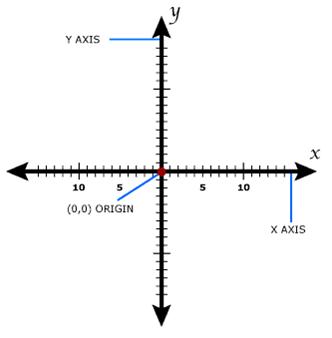
This is easy to imagine in 3dimensions. By dimension, I'm not referring to a place like the twilight zone I'm referring to units of vector. 2 dimensions with an (x) and (y) axis look like this:
3 dimensions look like this:
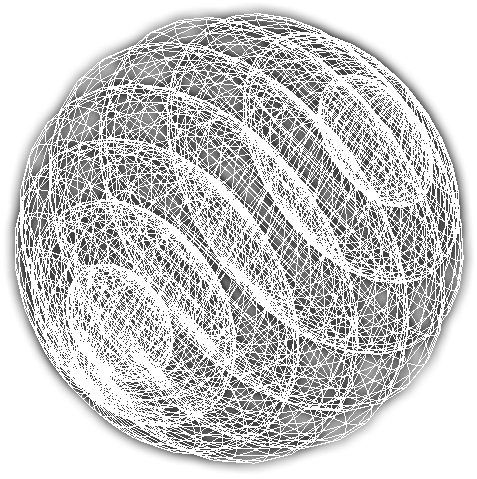
Energy propagating through a 3 dimensional space would look like a sphere in micro-gravity being disturbed. Like this:

Imagining (n) dimensional space is more difficult.
By (n) dimensional, I am referring to (n) as a variable to represent the number of possible dimensions.
String theory has often debated the number of dimensions, but I think we can move forward without deciding whether there are 26 or infinite numbers. I would tend to think if the Universe's math was perfect then the actual number would either be infinite or it would be a vector through which space could be bent that would most likely be explained using a constant with Pi. But It's not necessary to get into that for this discussion.
Instead let's just picture a hypersphere:
Which is similar to a hypercube, where the vertices of a 3dimensional cube are extended into space.
Which looks like this:
Only a sphere has an infinite number of vertices and trying to imagine it would give you a headache.

What we care about for this discussion is that space expands and contracts into these (n)dimensions and they are not observable to us from our 3dimensional vantage point in the same way that we we're not able to see the waves that were moving the ball.


Now let's start with quantum mechanics and the way that particles exist as strings or wave propagations of energy in 3dimensional space, bent into (n)dimensional space.

Let's say we have a particle. I'm going to start by representing it as a plane. When we talked about newtonian particle physics in middle school science, we were told that electrons existed in an orbit. Picture the particle as a plane where of the particle could be at any point on the surface of that plane.
These are all the possible places that the particle could be at any given point in time.

But we know that these particle orbits don't necessarily look like that.
We were taught it was something like this:

But picturing something like a quark or the particles that make up quarks is probably better imagined as something like this:
This is because the particle doesn't really orbit a neutron or anything, it's just wave of energy that we call a particle so that we can measure it as a distinct unit with specific properties.
But since this wave is bent into (n)dimensional space it's probably more like this:
Or this:
This is why I think particles appear to pop in and out of space. There paths don't make logical sense in 3dimensions. Predicting it's position is like trying to predict a point on a hypersphere.


Now since general relativity says that energy warps space-time, couldn't we assume that the same is true of the tiniest manifestations of energy such as quarks or other subatomic particles.
If so, then the motion or the existence of energy in quantum space is likely to warp or disturb space-time at the subatomic level.
Only since we're talking about 3dimensional space, these disturbances might be better represented like this:
But since we're really talking about (n)dimensional space-time then it might be best represented like this:
This could explain the way the interaction of subatomic particles. The way that they may overlap or cause their positions or rotations to line up in logical ways would result in laws and rules that keep electrons in outer orbits or molecules of Iron in rigid structures while water remains liquid at room temperatures. Molecules are collections of these blobs of energy that attract and repel each other with their fluctuating dance.


But what about Larger bodies?
What about General Relativity?

I propose that the collective distortions of space-time add up.
This is because space-time is expanding and contracting into (n)dimensions. It would explain why we don't see an apple get pulled toward an apple. But we see water in zero (or micro) gravity attracted to itself. In the presence of larger gravity fields, space-time isn't curved enough.
Imagine that large bodies like the Earth and the Moon are distorting space-time.
Here, the peaks represent the expansion of space and the valleys represent contractions.
But because we're talking about 3dimensional space expanding into (n)dimensions, we visualize this:

or this:
As space expands and contracts, objects end up closer with each passing instant. The distance between the two objects gets shorter and shorter.
Objects travel in straight lines following einstein's general relativity. Only instead of being attracted by a force, they are propagating along 3dimensional space as it expands and contracts into (n)dimensional space-time.
Like an inch worm.

Or like a cell phone sliding across a table:
If we could vibrate this gravity field to the right frequency we might build anti-gravity cars that would slide through the gravity field like those wind up toys that crawl from vibrating.

 I explained all this in a previous post

So that is the best way for me to explain my personal theory on Gravity.
I realize that this is in no way a proof or even a properly formatted argument. My explanation has holes.
Hopefully, this furthers the discussion in some way.

Although, I do realize that just because it may be possible to guess that Gravity fields are created by folding/vibrating (n)dimensional space-time, that it doesn't necessarily mean we will be able to manipulate gravity fields. After all, gravity fields appear to be caused by the interaction of energy in the form of matter not energy in the form of something such as electricity. It takes quite a large amount of energy to make solid atoms. It might be the case that creating an anti-gravity field strong enough to counter earths gravity would require an equivalent amount of energy. Based on the amount of energy caused by splitting atoms, the energy necessary to distort space as much as the earth might not be practical. What's important here is that a new outlook on the nature of gravity could lead to possibilities such as anti-gravity fields.

Just keep in mind that if this theory is on the right track, then this could explain why we haven't been able to explain what causes gravity. We observe the motion but our limited 3dimensional thinking made the source of this motion difficult for us to imagine. Just like looking at the beach ball floating on the ocean.


(M)M Theory

-(M)M


*******UPDATE******
If you're interested in learning more, I found some "light reading" on the subject below.
(I hadn't read this when I wrote this post)
http://arxiv.org/pdf/0706.0190.pdf

Spring Breakers: A Review

This summary is not available. Please click here to view the post.

Wednesday, October 24, 2012

Insta-Pin-Twitter-Book-Tube-Apps

Lindsay,
So that phone conversation we had the other day got me thinking. I don't really know anything about your job and some of this might not really apply but I kinda think it does because anything internet related these days relates to these fundamental aspects of the current state of social networking. Some of this stuff you've probably already thought about I'm sure, but I'm going to organize it and make it clear. It is why I'm considering tackling the issue of blogging as a documentary. but that's a seperate conversation.

Online
The way I see it, Online communication took an interesting turn when social networking suddenly became profitable. When Facebook (before they went public) suddenly became a sizable entity along side Apple and Google and the like, when Instagram as an app could sell for millions, when Pinterest and draw with friends could overnight explode as thriving businesses, and when bloggers suddenly became more valuable then print magazines, the world took a significant turn.

Media Impressions and Monopoly Banners
All online brands exist as entities that are valuable commodities for advertisers. Think of the internet as one big game of monopoly and starting a twitter account is like purchasing a square. Making Facebook go public is like putting 5 hotels on boardwalk or park place. Every time someone lands on your square they pay a fee. The user pays this fee as a "media impression".  Advertisers pay for this media impression. Let's think about it like your blog is a tiny stand in Calcutta India that sells sarees. You sell a lot of sarees, so a guy who sells vases comes over and says "can I put a sign next to your stand that tells people they can get vases over at my stand?" Call it a banner or a billboard but the guy is asking for ad space. Every person that walks up to your store to check out your sarees simultaneously checks out the messaging about vases and PR people used to call this a media impression. 

Phased Space, Warp Zones, and Meta-Hits
I was actually told that online people don't like to call them media impressions anymore when they refer to online stuff like twitter or instagram but I don't know what else to call it; because if a magazine calls one reader looking at a dress a celebrity is wearing in a magazine a media impression then why is a twitter-er looking at a tweet about a blog post that contains a photo from instagram any different? Well, that's probably exactly why they don't want to call it that. Because in online it's different. Landing on your twitter monopoly square means I also just landed on your instagram square, your facebook page, and your blog without even knowing that I was doing that. It is as though online locations are connected by some sort of sub-space wormhole that forces me as a user with a media impression to give, to simultaneously exist in a "Phased-space". In case you're not a Star Trek the Next generation nerd, It's kinda like a warp zone in Mario bros, only Mario gets to exist on level 2 and level 4 at the same time. Internet space is layered with the added dimensionality of being able to transition from location to location. WTF did I just say? It's like this, your user is Mario and if he looks at a tweet, he is existing on twitter and for the time being hanging out at your saree stand. He clicks on a photo of one of your sarees posted through instagram and by clicking, is warp zoned over to instagrams location on the internet. Only as far as advertisers are concerned, Mario is on twitter and instagram at the same time. They're both touting the media impression or "hit" as a reason for ad buyers to pay for ad space, aka banners about vases. If the internet was a physical space, then it's kind of folded so that at the point of your saree shop, twitter and instagram are layered over each other. Kinda like a wormhole only the "w"-axis means your not just jumping around points but you're actually simultaneously existing at those points. This is the added dimensionality that I speak of. It is a sort of phased existence in cyberspace. Where Internet 1.0 sold hits that crashed with the dot coms, Internet 2.0 sells multi-hits. I'm actually not sure what to call it because it's not really like they're hitting your location twice. They're hitting your location and existing in 2 places at once and 2 different locations are capitalizing on the sellable media impression. Call it phased space, call it layered, call it synergy, call it meta-present, call it warping, call it a multi-verse, call it whatever you want. For our purposes we're going to call it a "Meta-Hit". We're going to do that because the user technically isn't hitting instagram or twitter they're hitting your blog and their Meta-spacial position in cyber space is 3 places at once. 

ONLINE TRAFFIC-ing
That being said, the goal of online traffic is to corral as many users into your saree stand as you can so that people want to hang banners on your store. Only, these days it's important to extend your branding into the multi-dimensional potentiality that the internet 2.0 holds. You put up a Saree stand every where you can. You have a twitter, you have a blog, you have an instagram, you have a pinterest, you have a youtube channel, and whatever else you can think of. Your blog might be in calcutta but your twitter is in LA, your instagram is in San Francisco, and your pinterest is in NY. Each of them is catching the interest of users who could potentially warp-zone over to your store in calcutta. and all of those properties are sellable spaces that your friend who sells vases might want to buy. 

Meta-space gone Mobile
I'm not sure what the numbers are but Drawsomething makes scary dollars and it's just from mobile users. Nobody fucking plays Drawsomething anymore but the numbers they used to get are still worth some cash to buyers who can't afford TV. And that's the beauty of the world gone mobile. Thanks to Apple trumping blackberry with apps instead of shitty browsers, users are floating around meta-space all hours of the day. People used to only consume ads when they watched their black and white TV and when they read a magazine at the dentists office. Today, if they're awake, they're hopping around the internet making their traffic valuable to someone. Not only that but their telling their friends to meet up with them. Facebook as an app made it possible for users to share their internet travels with each other. From there the Insta-Pin-Twitter-Book-Tube-App potential means that the online-mobile-market is far more valuable than any ad on any magazine. If I buy an ad on your magazine, the user sees my vase and moves on. It's a billboard on La Cienega blvd that people ignore. Not only that but it costs a shit load of money. Mobile ads cost less and I can afford to buy more of them. Mobile Meta-space means consumers are seeing my vase while looking at your saree while sharing photos of food from some other dudes food truck that's geo-tagged next to someone else's dental practice that has a magazine sitting on the table that nobody looks at.

Conclusion
So, in regards to ways to "synergize" (I hate the word synergy) online presence. Expand your meta-hits into the w-axis. You should #hashtag everything. Go on other people's blogs and hashtag the shit out of em. Tweet at yourself. Tweet at celebrities so that their followers will look at who this funny person is and warp-zone over to your blog. Do DIY how-to-make-suspenders-out-of-old-Jeans because the girl who re-pins it will end up posting it on facebook and 2 of their friends might just click on your facebook page. All of it works together in that layered meta-space. You're just trying to drive that traffic to any one of your stores and hope they pay for parking. The rest is all up to your own creative fancy. 

This is a crazy time. Tweet about your youtube channel, that is posted on your blog, next to instagram photos of the shoot, right below your DIY about making your own youtube episode, on your pinterest account, because if you are at all interesting to anyone on the internet someone will want to pay you to hang a banner of their vase next to you and someday you could be worth more than a magazine. 


Insta-Pin-Twitter-Book-Tube-Apps,

-MM

(Technically my degree is not in Film studies. That was actually just a concentration. My degree is in Communication studies and my talent was always in explaining modern mass cultural behavioral models to my professors that were Thesis worthy only I was just makin' casual coffee talk. It's just the way I think. Point is, I'm not talking out of my ass, I know what I'm talking about, only I kind of am just talking out of my ass.) 

Sunday, July 22, 2012

The Dark Knight Trilogy: Modern Mythology of the Hero's Role in Civil Society

The debut of The Dark Knight Rises marks the third installment of Christopher Nolan's batman trilogy
and is the final conclusion to his modern mythology that explores justice, crime and human nature within the confines of civil society. The success of the first two films had raised such a high bar that much speculation and debate surrounded whether or not a third film could live up to and surpass its predecessors. After seeing the film, I can say that as the third part of a trilogy Nolan was able to successfully create a satisfying book end to the thematic structures of the first two films while escalating entertainment value and cinematic scale to a new level of believable comic book mythos come to life. Unfortunately however, I felt that as an individual self-contained story, the film fell short of the standard of perfection that Nolan had set for himself; while it was an incredible achievement, the moral assertions seem muddier and the hidden twist at the end only retroactively dissolved the arcs of its villains while simultaneously making batman's final triumph a bit anti-climactic. Despite, The Dark Knight Rises falling just barely short of perfection, I truly loved the film and consider the trilogy to be a lasting contribution to film canon as a meditation on the modern mythological role of the hero as protector of justice in modern civil society.


The Beginning of Fear and Justice

Batman begins starts by establishing the flaw with Gotham as the mythological embodiment of society. The Wayne family is a modern day wealthy aristocracy who live as champions of good providing philanthropic contributions and using their power for beneficial solutions such as the public transportation train system that they built. They are accidentally murdered in a robbery. Here the world is established to be imperfect. Some people are rich and others are poor. This is an almost Lockean assertion that scarcity leads to the necessity of civil government. The criminal avoids just punishment by acting as a witness to the crime boss Falcony. After the trial the Wayne murderer is himself murdered by a pawn to protect Falcony from his testimonies. Civil society appears to be further flawed because the limits of government include the ability to defeat corruption. Bruce Wayne confesses to his long time friend and assistant to the DA Rachel Dawes that he wanted to claim justice himself by murdering the man who killed his parents. She responds by saying that, "Justice is about harmony, Revenge is about making yourself feel better", and Wayne says, "Your system is broken". Here Nolan has laid out the beginnings of Batman's philosophy that civil justice has failed to uphold its obligation to society and it needs something more. Rachel Dawes quickly responds with the counter argument, "If you believe in Justice, look beyond yourself". Social order in civil society is greater than the needs for individual justice. The bulk of Batman begins then follows Bruce Wayne's journey as he learns to become more than just a man and becomes a servant of the civil society. 

A strong theme of Batman begins and later the Dark Knight Rises is fear. Bruce Wayne is established to have a Fear of bats. In a conversation with  Ra's Al Ghul who introduced himself as Henri Ducard, when asked what he wants Bruce Wayne Says, "I seek to fight injustice. To turn fear into a means to fight the fearful." Ducard later syas, "I can offer you a path. The path of a man who shares his hatred of evil and wishes to serve true justice, if you devote yourself to an ideal, you become something else entirely." Essentially Batman as a character is a wealthy aristocratic prince who has chosen to fulfill a self imposed civil duty to dedicate his life to fight injustice. Yet rather than fight as a public figure contributing wealth and leadership as his parents did, he fights injustice literally and becomes a symbol of fear. 

Only, the injustice that Ra's Al Ghul and Batman mean to fight are two different things. Ra's Al Ghul wants to destroy the decadence and corruption of Gotham while Batman seeks to fight crime. Ra's Al Ghul's plan is to destroy gotham literally with fear in the form of a weaponized fear-inducing chemical. Batman stops him. As ideologies this establishes a difference between the pursuit of justice as an equalizing of economic scarcity with the pursuit of justice as preserving societal harmony through the prevention of crime. Since crime is the breaking of societies set of formal rules that we call laws, this leaves a philosophical contradiction. Vigilanteism violates the law, so how is this an exemplar morality? 


The Dark Knight as higher Morality. 

The second installment titled 'The Dark Knight', pits Batman against a "new class of criminal" called the Joker. The Joker is seperate from other criminals because he isn't after money. He just wants to watch the world burn. His destruction of society seems to involve an exploitation of human nature.  
From the opening scene where he executes a mob bank robbery and talks his accomplices into killing each other to the manipulation and corruption of Harvey Dent, it is evident that The Joker's super power is the ability to exploit the predictability of human nature. He plans and schemes and seems to manipulate everyone in the film by pushing their buttons. 

The Joker Explains to Harvey Dent "Do I really look like a guy with a plan? You know what I am? I’m a dog chasing cars. I wouldn’t know what to do with one if I caught it! You know, I just, do things. The mob has plans, the cops have plans, Gordon’s got plans. You know, they’re schemers. Schemers trying to control their worlds. I’m not a schemer. I try to show the schemers how, pathetic, their attempts to control things really are..." In essence the Joker is explaining his belief in the ultimate futility of control and civil societies failure to provide stability. 

"You know what, you know what I noticed? Nobody panics when things go according to plan. Even if the plan is horrifying. If tomorrow I tell the press that like a gang banger, will get shot, or a truckload of soldiers will be blown up, nobody panics, because it’s all, part of the plan. But when I say that one, little old mayor will die, well then everyone loses their minds!... " The Joker explains how he derives his power. It lies in the predictability of humanities natural reaction to fear. 

"Introduce a little anarchy. Upset the established order, and everything becomes chaos. I’m an agent of chaos. Oh and you know the thing about chaos, it’s fearr."
There we have it. The Joker exists as a moral opposition to Batman because he represents anarchy and chaos and as the jungian archtypical trickster he represents our fear of the unknown and the unpredictability of the Universe. But in The Dark Knight, Batman defeats the Joker by not giving in to fear. He doesn't even kill the Joker. He uses the cell phone sonar invention only once as a means to defeat the Joker but knew it crossed a line and built in its own destruction and limited the powers use to one time. He doesnt give in to the seduction of ultimate power. The Batman is a true hero. 

Harvey Dent represents how crime can be fought without the Dark Knight. But threats to rachel make him consider violating his values. And when rachel is killed and he himself becomes a victim he proves to be corruptible. He chooses to exact revenge as a vigilante. As Two Face he justifies his murders as fate by flipping a coin. He does not pass judgement. Judgement is left to the fate of the coin flip. Only he is choosing who is judged. This is just another corrupting of justice. An extreme that in the story serves to prove the validity and necessity of Batman. 

The conclusion of The Dark Knight establishes that Batman is a moral alternative. It argues that the exemplar morality is to defeat injustice by getting your hands dirty. That a true solution to defending the state is being believed to be a villain but making the hard choices that are in the state's best interest. So The Dark Knight finishes as a film by adding to the moral conclusions of Batman Begins. 


The Dark Knight Rises from taking the fall. 

The Dark Knight Rises continues 8 years after The Dark Knight. In the third film, Batman has fallen from grace by taking the fall for Harvey Dent. The films primary villain is Bane. He has all of Batman's training as being a part of the League of Shadows. Just like Batman, he rejects the league of shadows for his own belief in something better. The film builds up Bane as the perfect adversary to Batman but then undoes him with the twist. After the twist, Bane is just a thug acting out of love. He doesn't represent an ideological opposite for Batman to defeat on his journey to realizing what it takes to be the truest hero. Instead Bane is just a thug. The true enemy turns out to be Talia Al Ghul who ends up being a reiteration of Ra's Al Ghul. Nolan seems more concerned with sewing up the themes of his films as a trilogy than continuing the moral debate his first two films established. 

What I would have preferred from the Dark Knight Rises, would have been for Bane to represent the opposite end of the ideological pendalum from the Joker. Where the Joker is Anarchy and Fear, Bane could have embodied The Dark Knight taken to a further extreme, he could have been the incarnation of power and strength gone wrong. He could have reacted to the realization that civil society is imperfect by imposing the ultimate power of fascism. He could have been the revolutionary turned dictator/tyrant. He could have been what would happen if someone with Batman's training and intelligence decided he was the only one deserving of ultimate power. That the failings of the state could be fixed by the empowered individual. He could have represented the ideological opposite of The Dark Knight and the opposite origin that the film established. He could have represented how being born from hell versus privelage could lead to an extreme view in the opposite direction. But no. Instead he was just a pawn and simply the muscle belonging to Talia Al Ghul's head. He acts out of some unexplored loyalty and love. Talia Al Ghul is the real villain. However, her philosophical vantage point seemed unclear to me. She criticized Batman's failure as being unable to follow through and being unable to fully trust the people. Yet her solution to the problem was to destroy all of society including herself. I didn't understand how blowing up gotham with a fusion reactor proved or solved anything. Even Ra's Al Ghul's plan in Batman Begins seemed to have more thought. If society destroys itself by fear then there is a starting point to rebuild. A clean slate. But destroying it completely with a bomb is just an apocalypse. It says that society is undeserving let's just destroy it. Where the first two films established mythological stories as premises to ideological debate, The Dark Knight Rises doesn't. It doesn't have much to say about morality. Or if it does, it's just not as strong and clear as the first two films. The focus of the third film seemed to be about building a new franchise with Joseph Gordon Levitt's character and finishing the themes of fear. Yet Bruce Wayne's leap of faith in the prison does not seem to finish the philosophical progression established by The Dark Knight. It is a step backwards. Yes he thematically proves himself by rising from ashes. It serves the film well but it doesn't serve the mythological arguments of the Trilogy as a whole. Yes, he sewed the thread of "Why do we fall, so we can learn to get back up" together but more important than minor themes like getting back up is the overall moral and mythological assertions about what a hero should or shouldn't do. A proper continuation would have provided an alternative to the Hero "taking the fall". I mean, he "rises" from "taking the fall" as a play on words, but I mean "taking the fall" as in he accepts condemnation from society. It could have been a logical progression of the moral argument by saying that a hero should openly stand in the face of injustice instead of hiding in the shadows. Taking the fall for Harvey Dent wasn't the best way to be a Hero and that in this third film he grows and learns there is a better way to be a Hero. A proper mythology should be about what the hero learns from his journey. The Dark Knight Rises doesn't seem to do this. Or if it does, then it is saying the hero learns that he wants to have a normal life. But not because there shouldn't be vigilante justice, since he decided to just pass the torch. It says be a Hero for as long as you can until your family butler chews you out for risking your life and family name. What?  

This third film builds up Bane to be the perfect adversary for Batman. But then it throws a twist in the mix. Only the twist undoes the villain Bane. He isn't the child born in Hell who ascended into the light. He wasn't trained by the league of Shadows. He wasn't the son heir of Ra's Al Ghul come to finish the destruction of Gotham. He was just a body guard of Talia. Just the muscle man. A devoted servant. We spent the whole movie wondering how Batman would rise to defeat the Dark Knight equivalent of James Bond's "Jaws" or "Odd Job". He was a lacky with flare. All the things we cared about Bane now mean nothing. Worst of all, the story doesn't seem to replace Bane with an equally substantial moral adversary. Even though Talia was pulling the strings the whole time and this was interesting for the plot, Talia Al Ghul is not fully formed as an opposition to Batman. Characters often exist as opposing ideologies that help support the idea that the protagonists actions or view points are better. That's how a story makes a point. In this case, Talia doesn't strengthen the moral position of Batman. She is merely exacting revenge for her father's failures. So she represents the idea that one should seek revenge. This doesn't seem to be nearly as strong as The Joker's need to inflict chaos and fear. The third film falls short. 


So as a trilogy the Moral Argument goes:
Batman Begins is about taking it upon yourself to fight injustice by conquering your fears.
The Dark Knight says battling fear and protecting justice requires getting your hands dirty even if it means being condemned by society. 
The Dark Knight Rises says rise to the occasion but live your life and let someone else get their hands dirty, and remember we said a bunch of stuff about fear and revenge and an underground society of anti-utopians, well their back but they don't actually represent anything you should just be afraid of them or not really them, just the daughter of that guy cuz she wants revenge."

It could have said, "Rise against fear but don't become something for society to fear". Or anything else for that matter. 

It's really hard to criticize someone as brilliant as Nolan whom I personally admire, but I think I'm making a pretty valid case here. But that's what happens when the studio forces you to make a sequel and turn it into a continuing franchise because it's too valuable of a property and they make you do it on a quick timeline. 

On a personal note, I loved the film. The Cat Woman was hands down the best iteration of the character. She provides valuable anti-hero alternative. She commits crime as theft out of necessity and establishes that the natural scarcity of society may necessitate the violation of laws and the violation of societies rules is not inherently evil. Not to mention, her character is attractive as hell and provides a good reason for Bruce Wayne to give a shit about the world again.

In the end, The Dark Knight rises is a spectacular film. Personally I enjoyed it a lot. It is one of the best movies of the summer and it is a shame to critique it and be disappointed. Yet given the moral complexity of the first two films and the strides that they accomplish, the third film film fails to add to the morality of the mythology. Instead, it is an entertaining film in the way that other films are entertaining. I often hate that directors are subject to so much scrutiny, but in this case Nolan has fallen just short of perfection and missing that mark is all the difference. Where he could have completed the moral argument of the mythology he created, he merely continued the franchise because the studio felt this is too valuable a property. I still am not sure what Talia Al Ghul was all about. In my personal opinion, if you take her out of the third film or leave her as a false ally and fourth position on the moral structure then the film could have worked. But instead, she is the main villain and her belief that society needs to be punished for decadence with complete destruction does not seem to be a valuable alternative to vigilanteism. In the end, the film seems to argue that while injustice needs to be fought, the cost takes its toll and an individual is best living their life and pursuing happiness then sacrificing them self to the demands of the State's defense. This is because Bruce Wayne ends up leaving his life as Batman and the protector of Justice behind. Where the The Dark Knight argued that the Hero's duty was to bare the burden of his responsibility to the state, The Dark Knight Rises suggests that the Hero should try to live a normal life. In the end, The Dark Knight trilogy completes the story to a satisfying conclusion but fails to provide a complete ideological argument about the hero's role in civil society. 

I loved the Dark Knight Rises, but instead of getting the Hero we deserved from the Dark Knight, we got the end of a trilogy. Nolan did do a great job of completing the story. And for anybody else but Nolan this would be satisfactory. Yet because the Dark Knight as a second film was so good and made such a clear and coherent contribution to modern mythology, the Dark Knight Rises but not high enough. 

Da nana na na na na na BATMAN,

-MM

Tuesday, July 17, 2012

Collating the Collective Consciousness: Social Transparency, Data Farming, National Security and The End of Privacy

Today io9.com posted an article about a canadian University professor by the name of Steve Mann who was assaulted in a McDonalds in France for wearing a computer device similar to the upcoming google glass. http://io9.com/5926587/what-may-be-the-worlds-first-cybernetic-hate-crime-unfolds-in-french-mcdonalds
They tried to remove the device from his head and according to Mann, "The eyeglass is permanently attached and does not come off my skull without special tools." This event marks what the article refers to as possibly "the world's first cybernetic hate crime". 


I thought about this and wondered, why was he assaulted in the first place and concluded that the french McDonalds employees were probably uncomfortable with being recorded. They were either upholding what they thought to be their duty to prevent competitive research as far as photographing their restaurant and menu (some businesses do not allow inside photography), or they were personally concerned about having their photographs taken. Steve Mann was able to take photographs of the assailants in the encounter despite them breaking his device because that is what it does. Yet doesn't that in some way prove the point of their concerns? 


A technologically augmented person is capable of recording everything around them. The lack of precedence has left the future of such possibilities in their litigious infancy and is currently a matter for the internet voices of discourse and descent. Steve Mann carry's a note from his doctor and wears the device as part of his research as a University professor. Are these justifications any different than a person simply wearing google glass? Do private citizens in public have the right not to be recorded? Is every place of business then a sanctuary of privacy where recording devices should not be allowed? What is the point then of using devices like this in public? Will it be like smoking cigarettes and electronic devices will only be allowed in designated areas? These questions are only the beginning. They are the proverbial tip of the iceberg in a titanic set of issues to come.  


The post-information revolution is marked by countless threats to our privacy from social networking, to data farming, TSA airport scanners, GPS cellular geotagging,  online web traffic cookies and whatever else can be surmised from the digital crumbs we leave laying around. I'm going to briefly discuss a few things that are less common knowledge as a means to broaden the debate because like the music industry's fight against digitized music, the battle for our privacy is practically already over. We are on a path of evolution towards existing as a collective consciousness where social transparency has replaced privacy.

We voluntarily forfeit most of our privacy through our social networking. We do so because the benefits outweigh the cost and only broadcasting to our friends and followers seems to be an acceptable amount of privacy. As long as my boss can't see it, who cares? Well, in actuality all of our traffic exists on servers in the cloud of information and we are establishing a permanent record of everything we ever do? If you thought figuring out the history of Julius Cesar from pottery artwork and the forensic science of CSI was impressive, just wait until your grand children's grand children go through your instagram photos. Not only that but every time you're logged into your gmail, words that you type and even searches and sites you visit are all logged. If you don't believe me, try typing boobs twice in a row in your search bar. Every time you tweet whether it originated from your foursquare app or not, you have just geotagged your account with your location data. Even if you don't tweet it, the cellular network server logs will still have location information from every time your phone triangulated its position and selected which towers to connect to. We forfeit this information because its collection is not meant to be personal. The data is collected for the optimization of the service that is provided. Whether its for your own good or whether the data that is farmed is sold by spotify, facebook or google to advertisers, it will soon cease to be unpersonal.

As our ability to process prediction information evolves into more quantum based visualization of potential realities, we will start tracking personal data. We won't only care if you typed canon into your search bar so that Amazon can recommend which camera deal you should look at. We're going to start caring who you are and how you behave. We're going to start caring about who you interact with and what kind of influence you have on other people. The data farming itself is far more valuable then the camera you were going to purchase. People just don't see it yet because they can't even imagine what these kind of tools will look like. Let me be the first to explain that we will eventually model your mind from the data traffic. Every tweet you ever post, will provide a collective context by which to profile and model everything from your social values, psychological states, and statistical information about your reactions. Basically what I imagine is a way of modeling a person as a quantum super position in psychological space. We would visualize each person as a quantum graph of possible behaviors. There's no point in privacy because we would know what you're going to do before you would even do it.

Not only that, but what happens when every car, every person, and every public space is packed with devices that record information about what's going on in the world. When cars start driving themselves they will be mounted with recording technology. Every person with a pair of google glasses will be recording information. And in the name of national security, all of the devices will be accessible to the necessary agencies. Not only that, but I read an article the other day about a device for airport security that sounded like a laser spectrometer that was capable of measuring whether or not you had even a few molecules of cocaine stuck to a dollar bill in your wallet or your adrenalin was rising. A spectrometer determines the molecules and elements in a substance through calculation like figuring out atomic weight. Only a laser spectrometer would gather this information from measuring the change in the speeds of light as they are absorbed and reflected by your body and clothing. Despite how it works, what it means is you could mount them all over the city. You could even attach them to your google glasses and look at a person and it could tell you whether their oxytocin levels were rising so that you knew if they were attracted to you.

Imagine a world where a person is sitting in a coffee shop. A guy looks over at a girl and instantly messages her a greeting instead of walking up and physically talking to her. The girl receives the message and she looks over at the man and starts going through all his information. Certain types of things require granting access. The guy can see that she is looking and starts granting her access requests to things like his instagram and facebook accounts. She starts going through his tweets and starts building personality models based on the words he uses. The guy can see that her oxytocin levels are rising, her adrenalin levels are minimal, and knows that she has not found anything surprising. The girl is currently dating a different guy, and he decides to check in on her. He messages her and starts viewing her activity. Some of it is currently cloaked or hidden,  so he starts running simulations that factor in the time intervals of her invisible traffic and the possibilities based on her geo-location and time of day. He can tell that she is meeting someone because the amount of process power that she is using, so he asks her who she is talking to. She could try to lie to him, but there isn't really a point because he would eventually be able to tell, so instead she starts sharing her vision. She shows him the guy she met and all his collected data. She asks if this upsets him. He replies you tell me if I should be concerned. He starts running simulations to see if he should be concerned and starts tweeting it and asks for an opinion poll on whether he should be concerned. friends of his and random followers start chiming in their votes and comments based on the information at hand.

This is a world without privacy and a world where we live in a collective conciousness. Currently it is science fiction, but the technology exists to make it become science fact. It's not too far away, it's right around the corner and barely different from the way things exist right now. The question that I'm asking is, if you think about it. Really think about it. Are you gonna throw that world out of your McDonalds? Or are you mad that the people who don't yet have the technology are discriminating against your right to be public?


Beep boop beep beep, robots n stuff,

-MM